Dmytro Yagunov: Carceral orders: informal prison hierarchies in contemporary Europe and the political weaponisation of prison subculture
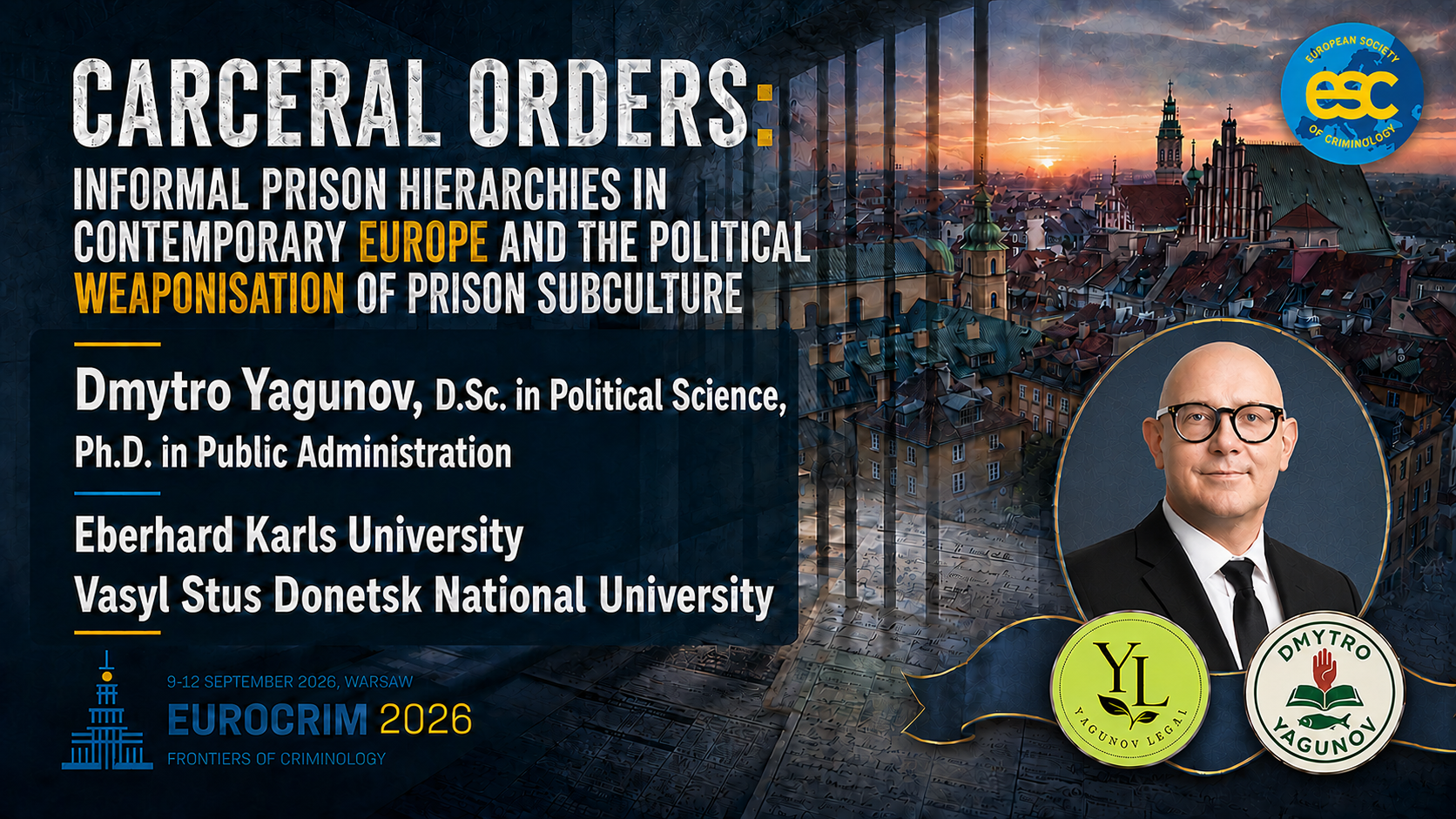
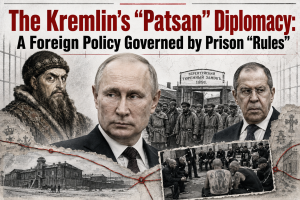
This paper examines informal prison hierarchies in contemporary Europe as sites of political power, social ordering, and geopolitical contestation, with particular focus on the Russian Federation’s deliberate weaponisation of carceral subculture across post-Soviet space.
Drawing on penological theory, criminological sociology, and critical carceral studies, the paper argues that informal inmate hierarchies are not merely adaptive responses to the pains of imprisonment but structurally embedded phenomena whose origins, in the Russian context, predate both the Soviet Union and the Russian Empire in their present form.
The paper traces the genealogy of Russian criminal and prison culture and the consolidation of the vory v zakone tradition, arguing that what began as a prison subculture has, over centuries of state co-optation and imperial reproduction, lost its prefix and become a dominant national criminal and prison culture.
This transformation has created the structural conditions for what the paper conceptualises as the Wagner Phenomenon — the systematic mobilisation of prison populations as military cannon fodder and the concurrent exportation of carceral logic as an instrument of statecraft.
The Wagner model reveals how Russia governs not only its prisoners but its citizens and dependent territories through hierarchical coercion, enforced loyalty, and the normalisation of violence as social discipline.
The paper further analyses the importation of this carceral order into post-Soviet and European space as a form of neocolonial influence, examining how informal prison hierarchies function as transmission vectors for Russian political and cultural hegemony, and addresses implications for European penal policy, democratic resilience, and human rights standards under the CPT and ECHR frameworks.