From Scandal to Policy: Why the State Must Prepare for the Consequences of War Rather Than React to Them
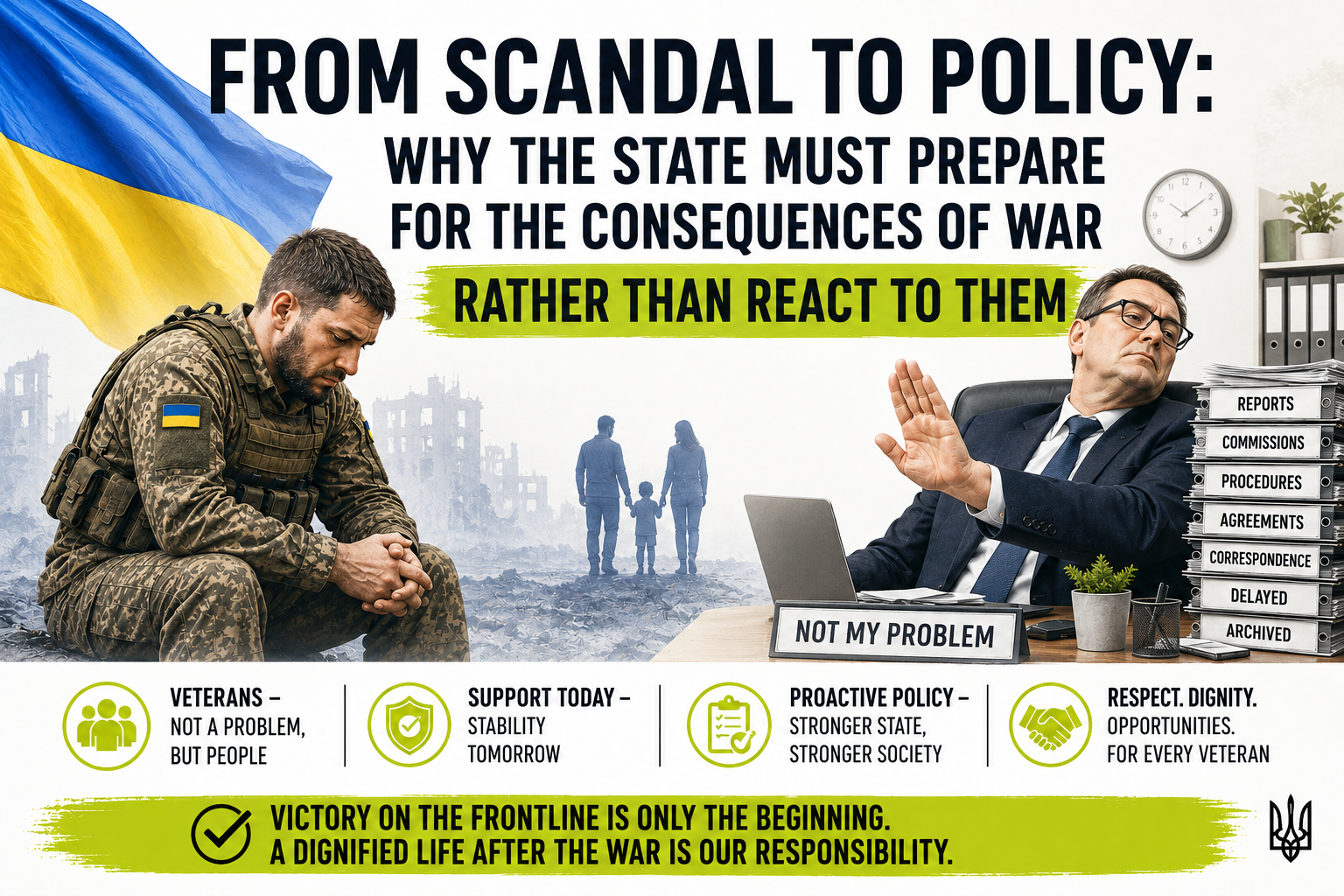
In 2024, more than 3% of individuals notified of being suspected of committing criminal offenses were military personnel or, in one way or another, participants in combat operations at the time the offense was committed. In 2025, this proportion rose to nearly 5%. Behind these percentages lie thousands of specific cases—and this is not a statistical coincidence, but a natural consequence of a full-scale war that has been raging for four years now.
These figures show just how critically important a well-thought-out veterans’ policy is becoming. After all, there are still many scandals like the “Skelya” case ahead, and so far, the state has been responding to each one reactively—with outrage, statements, and ad hoc decisions. But jumping from one scandal to the next is not policy. It is the absence of policy. A systemic problem cannot be solved with ad hoc gestures after yet another incident has made the headlines.
The consequences of the war are already evident, and they were entirely predictable. The return of hundreds of thousands of people with combat experience, psychological trauma, reintegration challenges, and the rising proportion of veterans and military personnel among those involved in criminal proceedings—none of this came as a surprise to any expert. That is precisely why responsibility for these consequences lies not with individual veterans, but with the state, which was obligated to prepare for them in advance: to develop rehabilitation, social, and legal mechanisms, rather than improvising after every new scandal.
The government must take responsibility for the consequences of the war. And the first step toward this is to stop reacting only after irreparable harm has already been done, and to finally begin developing and consistently implementing a genuine veterans’ policy.