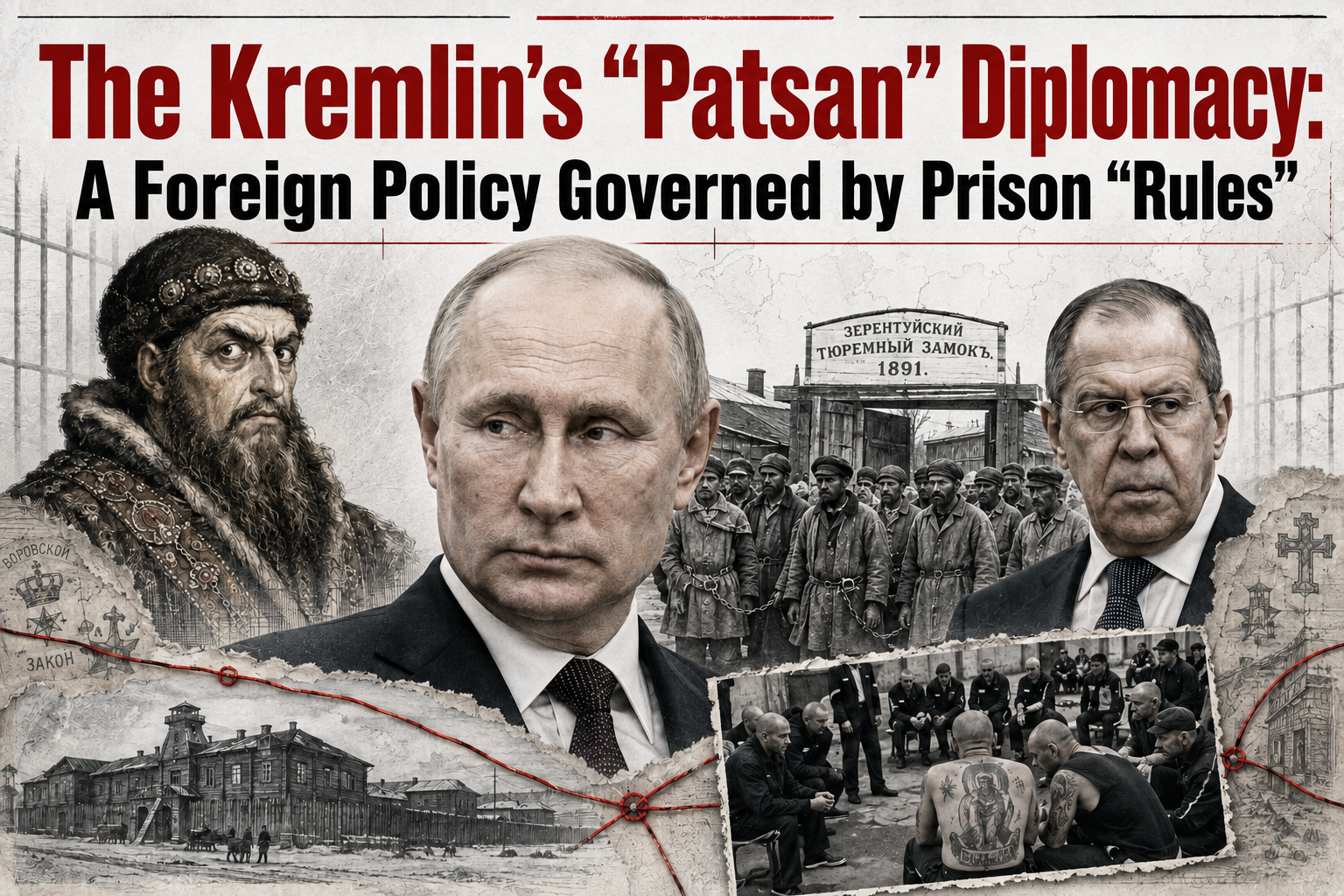
The Kremlin Comments on Greenland: A New Era of Geopolitical Cynicism, or How Russia Once Again ‘Has No Intention of Attacking Anyone’

At the beginning of 2026, the international diplomatic arena was at the center of unprecedented tension provoked by statements by the top leadership of the Russian Federation and the United States. The key event that set the new vector of Russian foreign policy was the speech of Russian Foreign Minister Sergei Lavrov at his annual summary press conference on January 20, 2026. As part of this event, Lavrov articulated the doctrine of “strategic equivalence,” which directly links the status of occupied Crimea to Washington’s ambitions to annex Greenland. Lavrov explicitly stated that Crimea is as critical to Russia’s security as Greenland is to the security of the United States. This parallel is not accidental; it serves as a tool to legitimize Russian expansionism by mirroring the actions of the US administration.
An analysis of Lavrov’s speech reveals a deep use of the concept of “historical justice” and a denial of the territorial integrity of sovereign states. By arguing that Greenland “is not a natural part of Denmark,” the Russian minister actually supported Donald Trump’s territorial claims, while using them to reinforce his own rhetoric about Ukraine. This demonstrates the Kremlin’s tactical calculation: using American imperialism as a shield to justify its own violations of international law. Lavrov emphasised that Russia is not interested in interfering in Greenland’s affairs, but stressed that NATO is going through a period of serious challenges, which indicates Moscow’s intention to take advantage of the transatlantic split.
Lavrov’s rhetoric also included manipulative references to the will of the people. He called for the opinion of the Greenlandic population to be taken into account in the same way as was allegedly done in Crimea, Donetsk, Luhansk, Zaporizhzhia, and Kherson through so-called “referendums.” This comparison is a basic element of Russia’s disinformation strategy aimed at creating the illusion of democratic processes that are actually taking place under military pressure. At the same time, Lavrov praised the return of the United States to “normalcy” under Trump’s leadership, where national interests are placed above international norms. This approach allows the Kremlin to form an image of a “multipolar world” where the rule of force replaces the rule of law.
| Key points of Lavrov’s speech (January 20, 2026) | Geopolitical interpretation and purpose |
| Comparison of Crimea and Greenland in terms of security importance | Legitimising the occupation of Crimea by mirroring US interests |
| “Greenland is not a natural part of Denmark” | Undermining Danish sovereignty and supporting American expansionism |
| Calling to take into account the opinion of the Greenlandic population (as in Crimea) | Promoting the narrative of “referendums” as a legitimate tool for annexation |
| Assessment of the Trump administration’s actions as a “return to normal“ | Approval of the rejection of international law in favor of transactional politics |
| Assertion that Russia has no plans to seize the island | An attempt to reassure the West by focusing on the internal conflict in NATO |
In a broader context, Lavrov’s speech was part of a large-scale campaign to discredit the Ukrainian government. On January 15, 2026, Russian Foreign Ministry spokesperson Maria Zakharova detailed the attacks, accusing the “neo-Nazi regime” in Kyiv of terrorist acts against civilians, including the use of drones assembled from components of the German corporation Rheinmetall. This information preparation creates a backdrop against which Lavrov acts as a “rational diplomat” proposing a new security architecture based on the division of spheres of influence between major powers, ignoring the interests of smaller actors such as Denmark or Ukraine.
A SOCIOLOGICAL CROSS-SECTION OF TRUMP’S SUPPORT: AN ANALYSIS OF AMERICAN PUBLIC OPINION
A study of opinion polls in January 2026 shows a complex and ambiguous picture of support for President Donald Trump. Despite his radical foreign policy initiatives, the overall level of approval of his performance remains stable but deeply polarised. Most Americans express concern about the methods of implementing plans to acquire Greenland, especially with regard to the possibility of using military force.
An analysis of data from poll aggregators as of mid-January 2026 shows that Trump’s rating ranges from 40-43%, which has been typical of his political profile for many years.
| Poll aggregator | Date of update | Approval (%) | Disapproval (%) | Difference (%) |
| Decision Desk HQ | 19.01.2026 | 42.8% | 55.0% | -12.2% |
| Real Clear Politics | 16.01.2026 | 42.1% | 55.3% | -13.2% |
| The Economist | 16.01.2026 | 40.0% | 56.0% | -16.0% |
| FiftyPlusOne | 19.01.2026 | 40.5% | 56.3% | -15.8% |
This stability indicates that Trump’s electoral base remains loyal despite the international crises. However, the gap between approval and disapproval remains wide, indicating that there is no broad national consensus on his policies. In particular, an AP-NORC poll found that only 2 in 10 Americans believe the president’s priorities are right, while 50% believe he is focused on the wrong goals.
The most resonant aspect of the January 2026 opinion polls is the attitude toward the plans for Greenland. A CNN poll conducted by SSRS from January 9 found that 75% of Americans oppose the US attempts to take control of the island.
| Political affiliation (CNN/SSRS) | Support (%) | Oppose (%) | Strongly oppose (%) |
| All adults | 25% | 75% | N/A 15 |
| Democrats | 6% | 94% | 80% 17 |
| Republicans | 50% | 50% | N/A 15 |
| Independents | 20% | 80% | N/A 17 |
It is important to note that even among Republicans, support for the plan is split evenly (50-50), which is atypical for Trump’s electorate, which usually shows almost monolithic support for his initiatives. A Reuters/Ipsos poll shows even lower numbers for overall support at just 17%, with 71% of respondents saying that using military force to take the island is a bad idea.
Attitudes toward the use of U.S. military power abroad remain critical. About 56% of Americans believe that Trump has gone too far in using the military to achieve political goals. For example, the actions in Venezuela, where Nicolas Maduro was captured, caused a divided reaction: 52% oppose military intervention, while 48% support it. However, in the case of Greenland, the level of opposition to military action is unprecedented – up to 86%, according to Quinnipiac University.
| Field of activity (Quinnipiac poll) | Approve (%) | Disapprove (%) |
| Commander-in-Chief of the armed forces | 43% | 53% |
| Foreign policy in general | 41% | 56% |
| Policy towards Venezuela | 41% | 52% |
| Economic policy | 42% | 53% |
| Efforts to buy Greenland | 38% | 55% |
These data indicate that American society as a whole supports the observance of international law (84% of respondents), and only 11% are ready to approve the violation of treaties for the sake of national interests. This creates a serious domestic political barrier for the Trump administration in implementing its most radical plans.
HISTORICAL PARALLELS: GREENLAND AND THE MUNICH CONSPIRACY
Comparing the situation around Greenland in 2026 with the invasion of Czechoslovakia by Nazi Germany in 1938 should be a central topic of political discourse. Analysts and historians point to disturbing functional similarities in the methods of pressure and the ideological justification of territorial claims.
The main analogy is that both processes were based on the desire of a large state to absorb the territory of a smaller state under the pretext of strategic necessity, ignoring the will of the local population and international obligations. Just as Hitler claimed the Sudetenland to “protect the Germans” and expand their “living space” (Lebensraum), so Trump argues for Greenland on the grounds of “national security” and the desire to turn the United States into a “growing nation” that expands its territory.
| Parameters of comparison | Czechoslovakia (1938) | Greenland (2026) |
| Rationale. | Protection of ethnic Germans and security of the Reich | Resource base and US Arctic dominance |
| Methods of pressure | Threats of war, diplomatic isolation | Tariff war, threats of annexation by force |
| Hybrid actions | Activities of pro-Nazi groups | Trump Jr.’s visits, attempts to bribe the population |
| International reaction | Policy of appeasement (Munich Agreement) | Resistance of the EU and NATO, trade sanctions |
| The role of international organisations | Inaction of the League of Nations | Violation of the UN Charter and NATO commitments |
If the Western allies allow the annexation of Greenland or agree to Trump’s terms under the pressure of tariffs, it will become a modern-day “Munich” that will lead to the complete collapse of the liberal world order.
There is a direct link between this crisis and Ukraine: Russia is using American threats to Denmark as a justification for its own aggression, claiming that the concept of sovereignty is no longer universal.
For Ukraine, this analogy is of existential importance. If the US administration demonstrates a willingness to sacrifice the territorial integrity of an ally (Denmark), it increases fears that Kyiv could be forced into a “peaceful settlement” that would involve legalising Russian aggression. In analytical circles, such a scenario is called “Munich for Ukraine,” where the country’s fate is decided by the great powers without its participation. Lavrov, comparing Crimea and Greenland, is actually inviting Washington to a new “Yalta” or “Munich” – a division of spheres of influence where international law is replaced by the law of force.

IMPACT ON THE INTERNATIONAL ORDER AND UKRAINE
Donald Trump’s actions regarding Greenland cause multidimensional damage to global stability. First, they undermine the foundation of NATO. Danish Prime Minister Mette Frederiksen’s statement that an attempt to seize the island by force could mean the end of the Alliance reflects the depth of the crisis. Article 5 of NATO’s Charter is based on mutual trust, and threats by one Ally against another destroy the very essence of collective security.
Second, it directly harms Ukraine. Trump’s use of imperial rhetoric provides the Kremlin with an ideal tool for disinformation. Every step the United States takes toward the annexation of Greenland is accompanied by Lavrov’s statements that “Russia is acting no differently than other great powers.” This is weakening the international coalition in support of Ukraine, as many countries in the Global South are beginning to see the conflict not as a struggle for principles, but as a clash between two imperialisms.
| Risks | Description and consequences |
| Erosion of the UN Charter | Legitimisation of territorial acquisitions by force |
| Crisis of confidence in NATO | Turning allies into objects of extortion |
| Economic destabilisation | Global trade war over tariffs |
| Strengthening the position of the Russian Federation | Using the “Trump precedent” to justify the occupation of Ukraine’s territories |
In addition, Washington’s pressure on Denmark diverts resources and attention from deterring Russian aggression. Instead of strengthening NATO’s eastern flank, European countries are forced to deploy forces in the Arctic to protect Greenland from their own ally. This creates a security vacuum that Russia is already exploiting by continuing its offensive in Donbas and attacking Ukraine’s energy infrastructure.
IMPACT ON THE INDIGENOUS PEOPLE OF GREENLAND AND SOCIAL CONSEQUENCES
The Trump administration’s actions ignore the rights and interests of the Inuit (Kalaallit), who make up the majority of the island’s population. The 2009 Self-Government Act recognises the Greenlanders as a distinct people under international law, giving them the right to self-determination.24 The US attempts to treat the island as a bargaining chip are a form of neocolonialism that threatens the cultural and political identity of the indigenous people.
European leaders have repeatedly stated that the island is not for sale. For the local population, Greenland is a “home”, not a resource base or a strategic asset for deploying missile defense systems. The use of hybrid methods of influence, such as attempts to bribe residents through offers of direct payments for secession from Denmark (from $10,000 to $100,000 per person), is causing outrage and resistance. Opinion polls show that only a very small proportion of Americans (13%) support this bribery strategy.
| Social and legal aspects | Description of the situation |
| Status of the people | Recognition of Inuit as a subject of international law (2009 law) |
| Attitudes of the population | 85% of Greenlanders are against joining the United States |
| Economic context | Greenland’s GDP per capita is about $57,000 (at the level of Germany) |
| Human rights. | Threats of annexation violate the right to self-determination |
US interference also threatens the environmental safety of the Arctic. Trump’s desire to exploit mineral resources and oil fields contradicts efforts to combat climate change, from which the United States officially withdrew in 2026. This poses long-term risks to the traditional Inuit way of life based on harmony with Arctic nature.
CONCLUSIONS: THE GEOPOLITICAL TRAP OF MULTIPOLARITY
The geopolitical crisis around Greenland in January 2026 turned out to be not a local dispute between the United States and Denmark as a systemic challenge to the international legal order, which has critical consequences for Ukraine. Russian Foreign Minister Sergei Lavrov’s speech on January 20, 2026, in which he drew a direct parallel between the occupied Crimea and Greenland, demonstrated a successful Russian strategy of instrumentalising American expansionism to legitimise its own aggression.
The doctrine of “strategic equivalence” articulated by Lavrov sets a dangerous precedent: if the world’s leading democratic state openly ignores the sovereignty of an ally for the sake of its own security interests, international law loses its universal character and becomes an instrument of selective application.
The analysis of sociological data shows a deep polarisation of American society regarding the actions of the Trump administration. While the fact that 75% of Americans oppose attempts to take control of Greenland, and up to 86% categorically reject the use of military force for this purpose, the stability of the president’s electoral base (40-43% of overall approval) allows him to continue his aggressive foreign policy.
Particularly worrisome is the fact that the opinion is divided even among Republicans (50/50), indicating intra-party splits on this issue. At the same time, the massive opposition to the use of military force demonstrates that American society as a whole supports compliance with international law (84% of respondents), creating a potential internal barrier to the most radical scenarios.
The historical parallels with the Munich Agreement of 1938 are particularly important in the context of the Ukrainian crisis. Functional similarities between the seizure of the Sudetenland by Nazi Germany and attempts to annex Greenland lie in the use of similar methods of pressure: threats of force, diplomatic isolation, hybrid operations to influence the population, and justification of territorial claims through the concepts of “security” and “strategic necessity.” If the Western allies capitulate to Washington’s demands under the pressure of tariffs, it will become a modern-day “Munich,” leading to the collapse of the liberal world order. For Ukraine, this analogy is of existential importance: the demonstration of the US willingness to sacrifice the territorial integrity of its ally (Denmark) increases fears that Kyiv could be forced into a “peaceful settlement” with the legalisation of Russian conquests.
The impact of the Greenland crisis on the Ukrainian situation is multidirectional and systemic.
First, Lavrov’s rhetoric creates a false equivalence between Crimea and Greenland, allowing Moscow to promote the narrative of a “natural division of the world” where international law is leveled by the interests of the great powers.
Second, the crisis diverts NATO’s resources and attention from deterring Russian aggression: instead of strengthening its eastern flank, European countries are forced to deploy forces in the Arctic to defend themselves against their own ally.
Thirdly, Trump’s use of imperial rhetoric weakens the international coalition in support of Ukraine, as countries of the Global South begin to perceive the conflict not as a struggle for principles, but as a clash of two imperialisms.
Fourth, the very basis of NATO’s Article 5 is being undermined: threats by one member to another destroy the essence of collective security.
The social and humanitarian consequences of the crisis also deserve special attention. The Trump administration’s actions ignore the rights of the Inuit indigenous people, who are recognised as a separate people with the right to self-determination under the 2009 Self-Government Act. Attempts to treat Greenland as an object of buying and selling or bribing the population (offers of $10,000 to $100,000 per person for secession from Denmark) are a form of neo-colonialism that threatens the cultural and political identity of the island’s 56,000 inhabitants. It is important to note that Greenlanders have a high standard of living (GDP per capita of about $57,000), and 85% of them oppose joining the United States, making Washington’s economic arguments untenable.
The Greenland issue should be seen as a test of the survival of the current system of international law and the supposed world order. The Kremlin’s rhetorical victory is that Lavrov has successfully used American expansionism as a shield to justify his own violations of international law, driving a wedge between the United States and its European allies. The crisis demonstrates the formation of a dangerous precedent for a “multipolar world” where the rule of force replaces the rule of law, and the concept of sovereignty loses its universal character. For Ukraine, this means the threat of erosion of international norms on which the demand for restoration of territorial integrity is based. The refusal to protect the sovereignty of one ally opens the way to a forced “peace” at the expense of another, making the Greenland crisis not a regional dispute but a matter of global stability.
Not only the future of the Arctic and Greenland, but also the success of Ukraine in its war for independence depends on whether the international community – including the European Union, opposition forces in the US Congress, and international organisations – can stop this drift toward neo-imperialism. Replacing diplomacy with coercion and tariffs leads to global chaos, which primarily benefits authoritarian regimes in Moscow and Beijing. Thus, the defence of the territorial integrity of Denmark and the rights of the people of Greenland is at the same time a defence of Ukraine, as both cases are based on the same fundamental principle: the inadmissibility of changing borders by force in the 21st century.