‘Russia’s Liberal Opposition is Putin’s Soft Power in Europe.’ An Interview with Djamboulat Souleimanov, Leader of the Chechen National Liberation Movement United Force

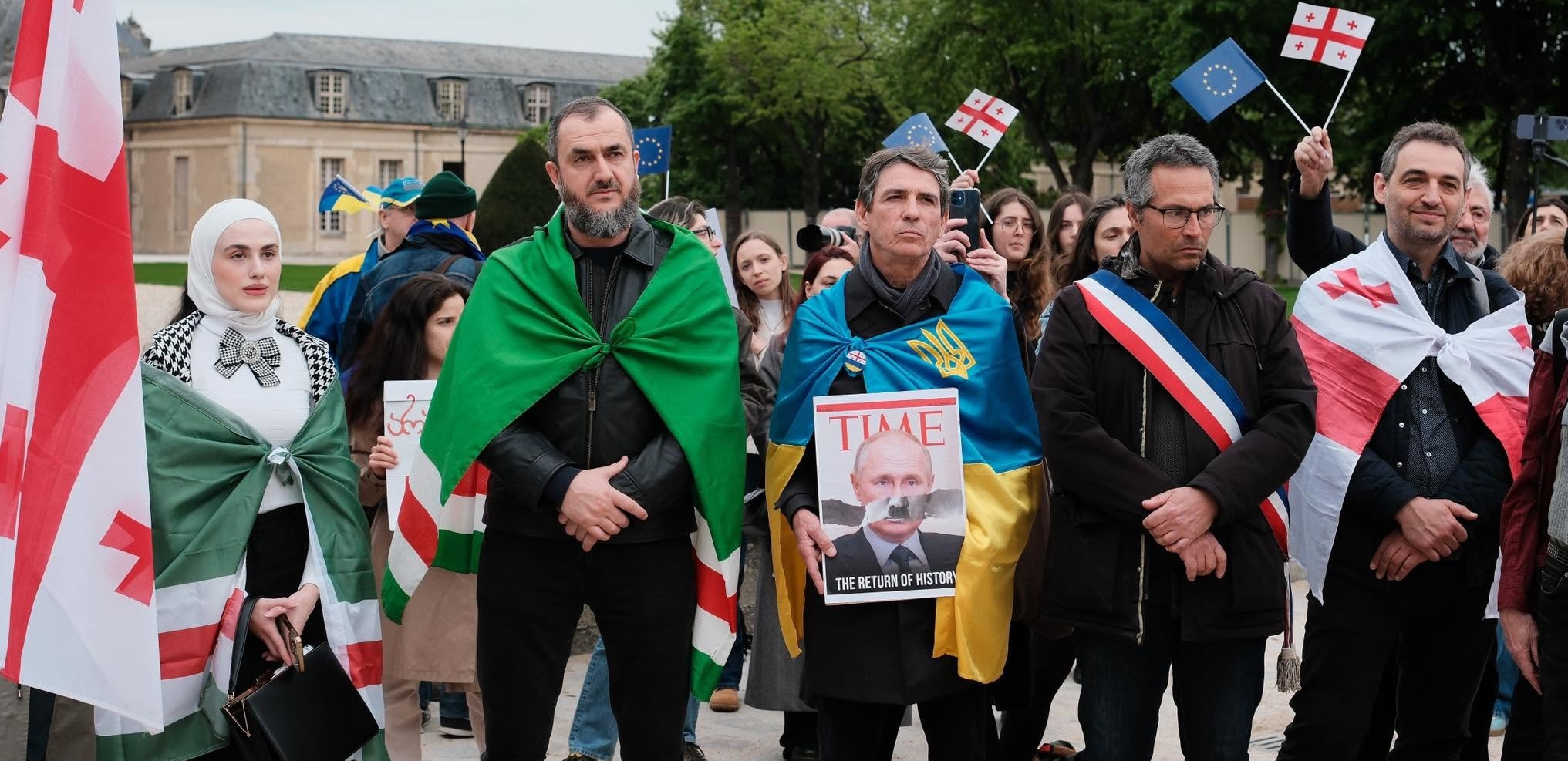
He is hard to miss in the corridors of the Palace of Europe in Strasbourg. Djamboulat Souleimanov — a scholar-linguist, philologist, and historian who was compelled to take up arms in two Chechen wars for independence — today wages a no less important struggle: in the chambers of PACE, in the offices of European delegations, and in the public arena. He leads the Chechen national liberation movement United Force (“Yedyna Syla”), heads the only political organization of Chechens in France, “Bart-Marsho” (“Unity and Freedom”), and currently represents the interests of 22 subjugated peoples of Russia before European institutions. We met to speak about what is usually avoided in the “grand” political discussions about Russia: the future after Putin, the hidden imperial ambitions of the so-called liberal opposition, and why decolonization is not an abstract theory but the only path to genuine peace.
Dmytro Yagunov: Djamboulat, I will begin with a question that seems simple but is actually extremely complex. When you hear the phrase “the future of Russia” — what do you imagine? What does that image look like to you?
Djamboulat Souleimanov: I see not one future but several possible scenarios. The first — and the most dangerous — is that Russia remains within its current borders, only the political leadership changes, and it continues its imperial policy in a softer form. This is precisely what is being offered to us today under the guise of a “democratic” opposition. The second — which I consider the most honest — is decolonization: recognition of every people’s right to determine its own destiny. If peoples can, without any pressure and without fear of bloody consequences, become independent nations, then perhaps some of them will voluntarily choose to remain within some kind of union — but on equal terms. The third scenario — gradual transformation with genuine federalization and recognition of peoples’ rights — is in principle impossible. An empire either oppresses and expands, or it collapses; its nature allows for no third option. Therefore, until we begin to speak openly about the fact that Russia is a colonial empire, no real transformation is possible.
Dmytro Yagunov: You used the phrase “colonial empire.” This concept as applied to Russia remains controversial in European academic and political circles. How do you substantiate this thesis?
Djamboulat Souleimanov: Very simply — through facts. Take Chechnya. The first war, the second war, hundreds of thousands killed, villages and cities burned, torture, filtration camps. All of this is documented, including by the Council of Europe itself. Take Tatarstan, Dagestan, Bashkortostan — peoples that were absorbed by Muscovite expansion at various historical periods and who today have no real self-governance, no real protection of their culture and language. If this is not colonialism — then what is it? The metropole exploits the resources of the national republics, sends their inhabitants to die in wars — first in Chechnya, then in Syria, now in Ukraine — but does not recognize them as subjects of their own fate. The formal name “federation” changes nothing in substance if there is no real self-governance.
Dmytro Yagunov: PACE is currently actively promoting the so-called “anti-Putin opposition.” How do you assess their role and their true political positions?
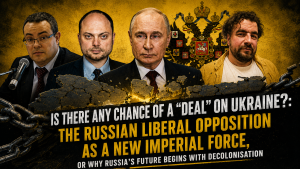
Djamboulat Souleimanov: I will say it plainly: they are Putin’s soft power in Europe. I am not saying that these people consciously work for Putin — it is something else. They are carriers of the same imperial worldview, simply in a softer package. They want to remove Putin, take his place, and continue the veiled policy of Russian imperialism. Kara-Murza recently said in the French Senate that it is hard for Russians to kill Ukrainians because “we are very similar,” and that is why representatives of national minorities are taken into the army. Do you understand what lies behind this? He does not consider us — Chechens, Tatars, Dagestanis — to be full human beings. For him, we are expendable material. This is open xenophobia. And this is said by a person whom Europe receives as a symbol of “democratic Russia.”
Dmytro Yagunov: Kara-Murza was released in a prisoner exchange that required Germany to free the killer of Chechen field commander Khangoshvili. How did you experience that?
Djamboulat Souleimanov: It was a very painful moment. To free Kara-Murza and Yashin, Krasikov was released — the man who killed the Chechen field commander Khangoshvili in Berlin. The German authorities resisted, but American political pressure proved stronger. What does this tell us about the value of Chechen lives in the eyes of the West? We can be killed. Our killers can be exchanged for politicians who will then deliberate in European parliaments about “European unity” and “democratic Russia.” I met with Kara-Murza and offered to act as a mediator — to connect him with Khangoshvili’s family, because the human thing to do would have been, even if not publicly, to ask forgiveness of that family. He refused. And his subsequent statements showed that this was not forgetfulness, but a matter of principle.
Dmytro Yagunov: You said that they “promote the same narratives about Russian imperialism in a softer form.” Can you give specific examples of such narratives?
Djamboulat Souleimanov: The main narrative is “the unity of Russia.” When I proposed to Kara-Murza that the opposition include representatives of subjugated peoples — Tatars, Dagestanis, and others — he replied that he is a patriot, that he loves Russia, and that he does not want to allow its “disintegration.” But what does this “disintegration” mean? For him it is a tragedy. For a Chechen or a Tatar — it is liberation. The difference is fundamental. If you are truly a liberal and a democrat, and not merely someone who wants to change the political leadership, you must open the door and say: “Those who want to leave — go, we are not holding you back. For those who remain — we offer genuine equality.” That is the criterion of a true democrat. We hear nothing of the sort from this opposition.
Dmytro Yagunov: You work at PACE with representatives of many peoples of Russia. Tell us more about your coalition. Who belongs to it?
Djamboulat Souleimanov: Today I have been officially delegated authority to represent the interests of several peoples and movements: Russian Germans, Karelians, the Confederation of Siberians, Tatars, Kalmyks, Dagestanis, and Circassians — and these are three peoples and three subjects of the Russian Federation: Adygea, Karachay-Cherkessia, and Kabardino-Balkaria. In addition, work is underway to bring in representatives of the Bashkirs, Yakuts, and Buryats. In total, we are talking about 22 republics with a population of approximately 37 million people. These are people who categorically disagree with Putin’s policies, who are used as cannon fodder in the war against Ukraine, and who — if given the opportunity — are prepared to declare their aspiration for independence or, at minimum, for genuine self-governance.
Dmytro Yagunov: How does Europe perceive this coalition? Is there an understanding that these peoples are not merely ethnic minorities but political actors?
Djamboulat Souleimanov: Understanding is gradually coming, but very slowly. At the beginning of 2023 we began systematic work at PACE with the support of the Ukrainian delegation. Mariia Mezentseva offered us cooperation and a platform for advancing our agenda. I am currently holding meetings with delegates from the Netherlands, Switzerland, France, Sweden, and Lithuania. We insist on the creation of a separate platform within PACE for the representation of colonized peoples of Russia. It is critically important that this be a separate form of representation — not incorporation into the “Russian opposition,” but an independent voice. Because we are not the opposition to Putin — we are an alternative to the system itself.
Dmytro Yagunov: You mentioned Ukraine. Tell us about the Verkhovna Rada and the recognition of Ichkeria as a temporarily occupied territory. How did that come about?
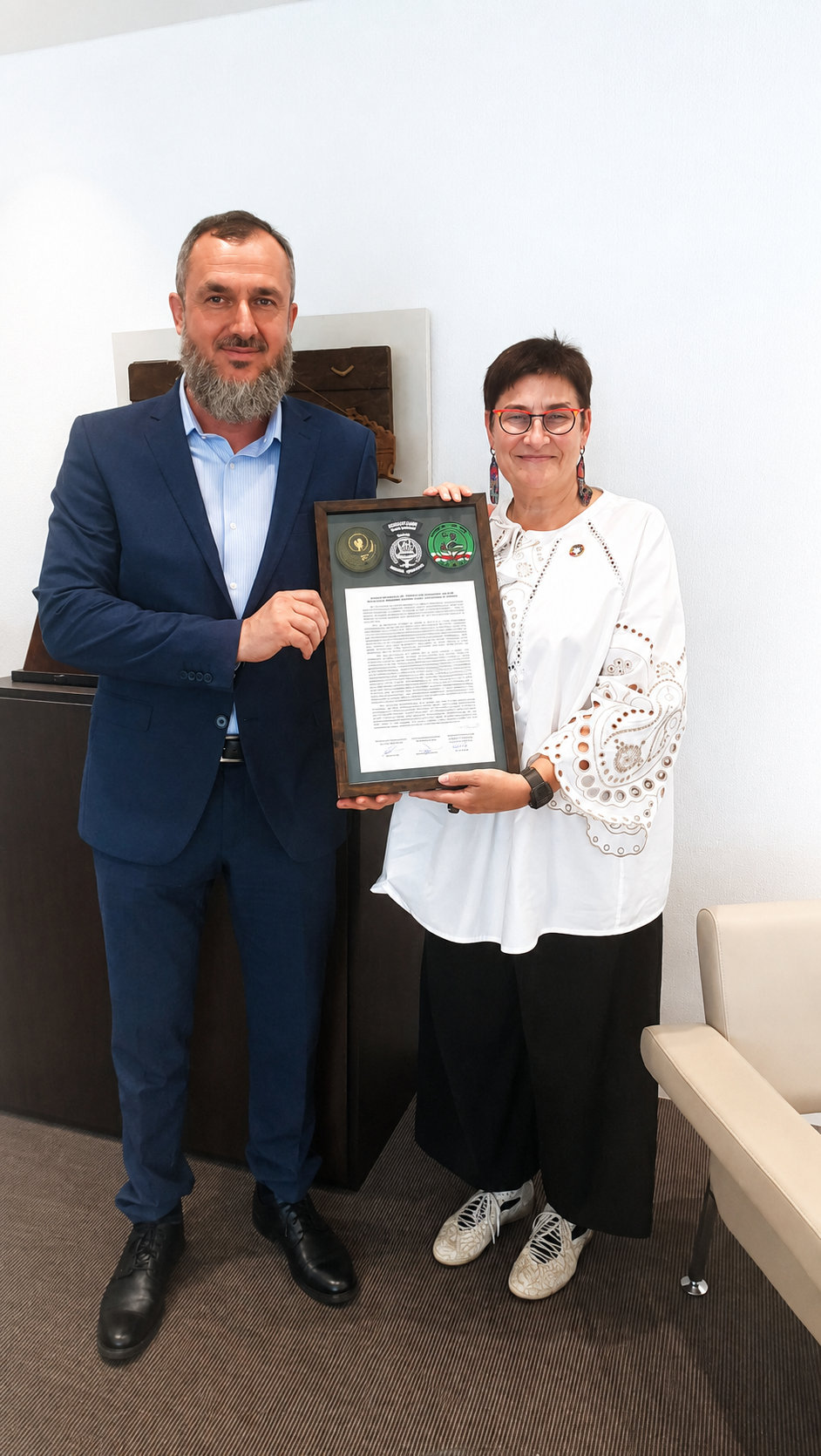
Djamboulat Souleimanov: That was the most important symbolic victory. At the end of March 2022, when Russian forces had just withdrawn from Kyiv, I came to Ukraine. Many thought I had come to fight — I had commanded a battalion in the first Russo-Chechen war. But I understood that our fighters were already in Ukraine and that my contribution should be political. I reached Ukrainian deputies through military personnel from the Chechen diaspora and proposed two projects: recognition of Chechnya as a temporarily occupied country and recognition of the genocide. On 18 October 2022, the Verkhovna Rada of Ukraine adopted a resolution recognizing the Chechen Republic of Ichkeria as temporarily occupied by the Russian Federation and condemning the crime of genocide. This is of enormous political significance. It is a precedent. It is an officially recorded state position to the effect that Chechnya is an occupied territory, not a “subject of the federation.” After that, the Chechen national liberation movement “United Force” was established, and in December the Verkhovna Rada of Ukraine concluded a formal cooperation agreement with it. As a platform for this cooperation, on the initiative of Oleksandr Merezhko, Chairman of the Committee on Foreign Affairs and Inter-parliamentary Activities, the International Parliamentary Association “Free Ichkeria” was created.
Dmytro Yagunov: Chechnya survived two devastating wars, and you personally went through that. How does personal experience shape your political view of Russian imperialism?
Djamboulat Souleimanov: I am a scholar by education — a linguist, philologist, historian. I did not plan to become a military man. But the first war made me a battalion commander. I lost two brothers. I witnessed torture, burned villages and cities, the destruction of entire communities. Then came guerrilla warfare, emigration to Azerbaijan where we too found ourselves in danger, political asylum in France. And all the while Europe was silent. No one spoke about the atrocities in Chechnya. That European indifference was also very painful. It is precisely this experience — the experience of a person who watched his people being destroyed while the world remained silent — that shapes my understanding of Russian imperialism. This is not an abstraction. These are the fates of people, specific names, specific crimes of murder and torture, specific burned and bombed houses and completely destroyed settlements, the expulsion of specific individuals.
Dmytro Yagunov: The Syrian episode has seriously compromised Chechens in the eyes of Europe. How do you work through that?
Djamboulat Souleimanov: This is our great tragedy. Those who went to Syria were above all the children of fallen Chechen commanders and fighters — young people who wanted to settle accounts with the Russian army that was present there. We tried to dissuade them, but young people are impetuous, and explaining political nuances is difficult. Some fell into radicalization — there is no denying this. But the majority of Chechen volunteers in Syria, who fought specifically against Russia and the pro-Russian Syrian regime and not within ISIS — about these people nothing is said. As a result, the Syrian episode became a pretext for the deportation of hundreds of Chechens from European countries, and many of them ended up directly in Russian prisons, and from there those who survived torture were sent to war. This mechanism continues to operate: extraditions from France and other European states continue even now, despite Russia’s war against Ukraine.
Dmytro Yagunov: How do you explain the phenomenon — why is Europe prepared to receive Russia’s “liberal opposition” but not representatives of the subjugated peoples?
Djamboulat Souleimanov: Very simply: Europe thinks in categories of states, not peoples. Kara-Murza, Yashin, Gudkov — they speak about “Russia,” and for European politicians this is an understandable frame. They envision the future of Russia in roughly the same way as these opposition figures: a change of regime, democratization, accession to European institutions. Chechnya, Tatarstan, Dagestan — this falls outside that frame. It is uncomfortable. It creates difficult precedents. It is therefore more convenient to regard us as “minorities” rather than as political actors. But it is precisely political subjecthood that we are seeking. And we will continue.
Dmytro Yagunov: PACE recently provided a platform to the “Russian democratic forces.” How do you respond to this, and what are you doing about it?
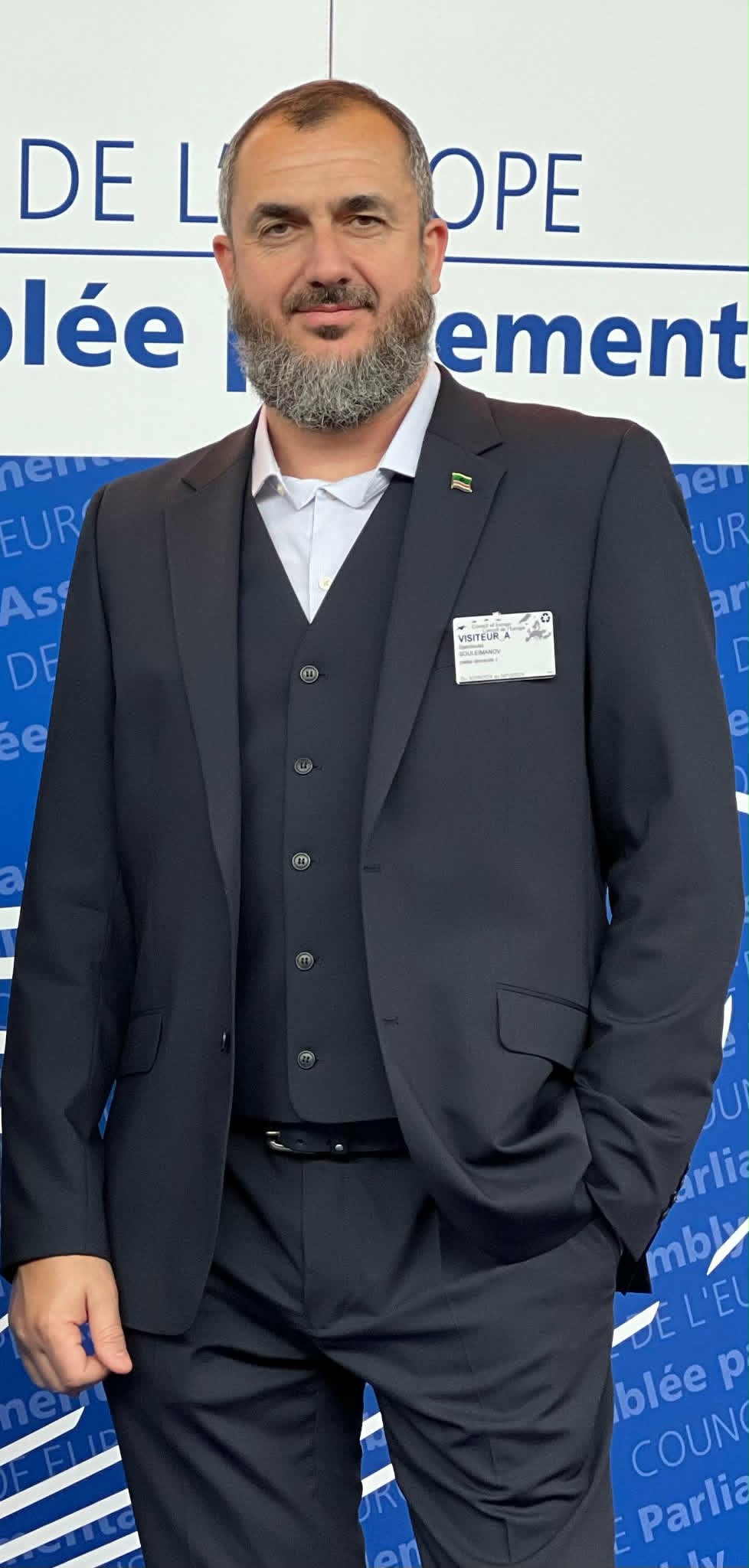
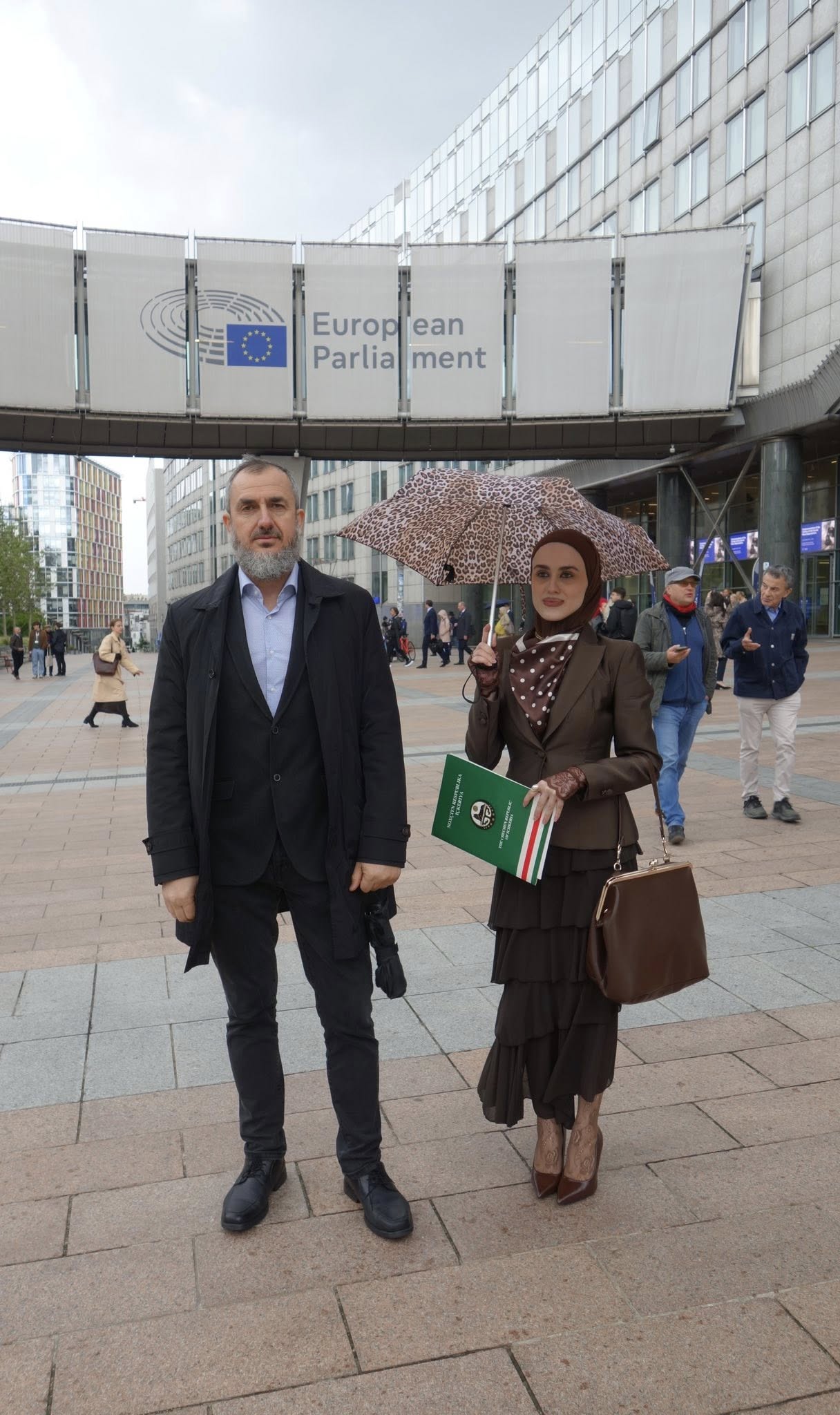
Djamboulat Souleimanov: I have already conducted a series of meetings with the heads of delegations of a number of European states. Together with members of our team, I met with the President of PACE and presented our position. It is unequivocal: this pseudo-opposition cannot be allowed to become the sole voice of “post-Putin Russia” at PACE. They promote Russian imperial narratives in a soft form. We insist on the creation of a separate platform for indigenous, colonized peoples. We and Ukraine are allies in this matter, and that is very important.
Dmytro Yagunov: What does a policy of decolonization of Russia mean in practice? What concrete steps, what institutional mechanisms?
Djamboulat Souleimanov: First and foremost — recognition of the very fact of the colonial character of the Russian state. This must become the official political position of leading democracies. Without this, everything else is cosmetic. Next — genuine support for the political movements of subjugated peoples: funding, platforms, legal protection from extraditions. Ending the extradition of Chechens and representatives of other peoples to Russia is a direct contribution to the struggle against Putin. Europe must stop being complicit. In the long term — the development of international mechanisms that would allow the peoples of Russia to exercise the right to self-determination in a civilized manner, as happened after the dissolution of the USSR. Yes, it is complex, it requires time, but the alternative is the eternal threat posed by an aggressive empire.
Dmytro Yagunov: A final, personal question. Do you believe you will one day return home? That Chechnya will be free?
Djamboulat Souleimanov: We have no choice but to believe and to struggle. To think about whether it will succeed or not is a luxury we cannot afford. Our people have paid a very high price — too many killed, exiled, tortured. We are a small nation, but one with very strong social bonds. Here in the diaspora, everyone is a relative or a friend of everyone else. Everyone understands that this can affect each of them. We cannot stop. Not because we are certain of victory — but because fighting is the only dignified path. Rather than creating yet another “government in exile” driven by personal ambitions, we are conducting genuine preparation for the de-occupation of the Chechen Republic of Ichkeria. This is not a dream — it is a program.
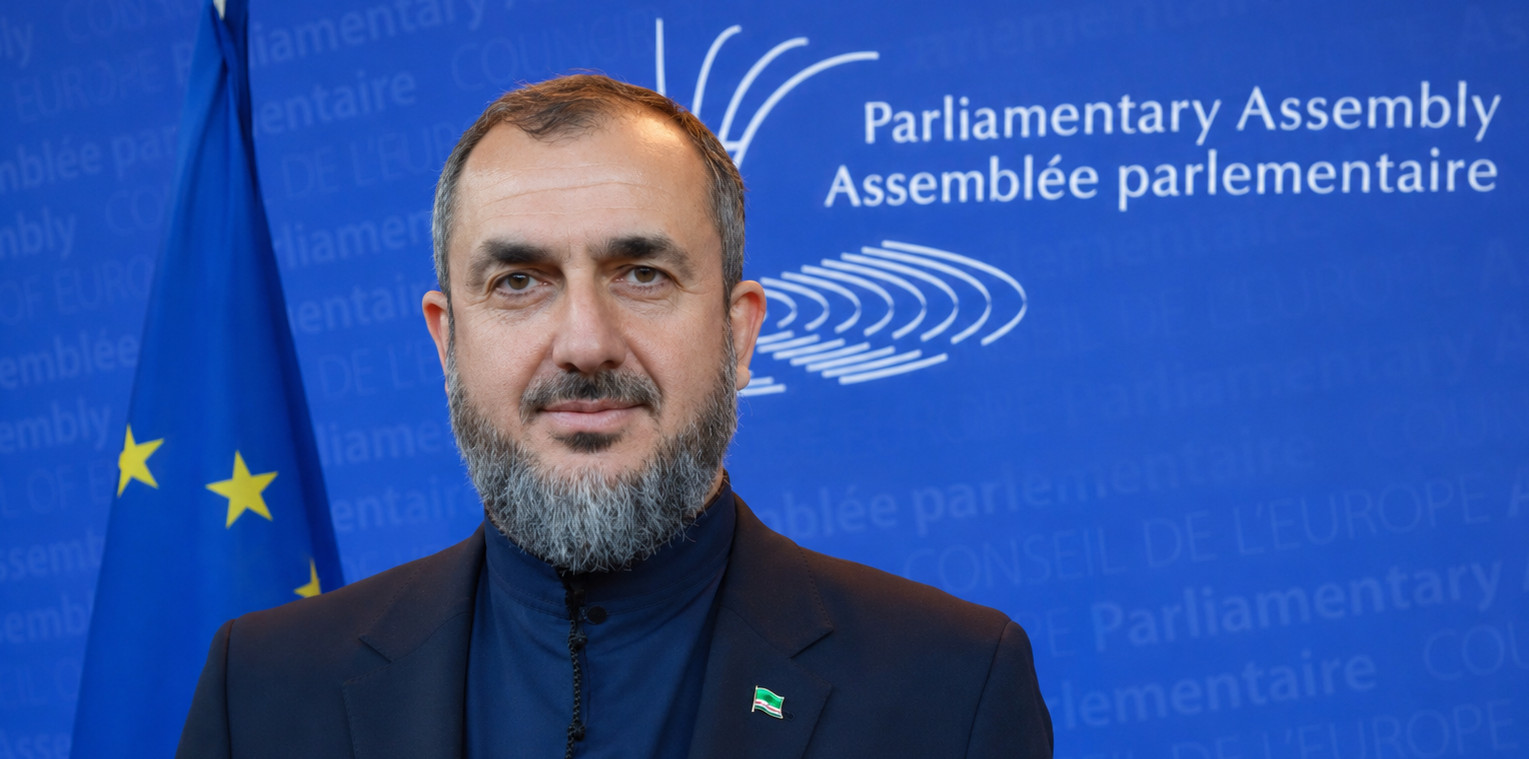
Djamboulat Souleimanov is the Head of the Chechen national liberation movement United Force (“Yedyna Syla”) and the leader of the “Bart-Marsho” association — the legitimate political organization of Chechens in France. He is a linguist, philologist, and historian, and a participant in two Chechen wars for independence. He has lived in France since the end of 2006.