Rome No Longer Builds Roads: On the Order of Subedei and the End of Imperial Purpose

“The tumen of Subedei came galloping to Signaq in a cloud of dust that covered the entire sky. Subedei sat hunched on a light-dun horse with a long black tail that swept the ground. His right eye had been lost, a scar running through his brow and cheek, while the left, wide open, seemed to pierce with its searching gaze into the secret thoughts of men. The warriors called him ‘the snow leopard with the severed paw.’ Genghis Khan himself had entrusted Subedei-Baatur to serve as the mentor and military counselor of his young grandson Batukhan, the continuer of the grandfather’s conquests” (Vasily Yan, Genghis Khan)
I. A MAN WITHOUT ROYAL BLOOD
He was not a Chinggisid. He had no royal blood. Born into the Uriankhad tribe – a simple steppe warrior. Yet Subedei-Baatur (c. 1175–1248) became the “eye and hound” of Genghis Khan, and later the chief architect of Mongol conquests stretching from China to the Adriatic.
This detail is essential: Subedei was no prince, no heir, no divinely chosen figure. He was a product of a system that rewarded competence, not lineage. Genghis Khan dismantled the traditional steppe aristocracy and replaced it with a meritocracy of the sword. Subedei embodied that principle: he owed no one anything except his victories.
II. NUMBERS THAT DEFY COMPREHENSION
65+ victories in major battles. Not a single defeat in field operations across five decades of service.
20+ conquest campaigns – from China and Central Asia to Poland and Hungary.
~6,000 km – the 1222–1223 raid through the Caucasus, Crimea, and the steppes to the Kalka River. The longest strategic raid in pre-modern military history. For comparison: the distance from Kyiv to Lisbon is approximately 3,500 km.
4 great khans he served – and outlived them all. Genghis Khan, Ögedei, Güyük, Möngke. Subedei died in his own bed at age 72 – a remarkable achievement for a man who spent more than half his life on military campaigns.
III. SYSTEM, NOT LUCK
1223. The Kalka River.
Subedei has half the warriors of the combined Rus′–Cuman force. The result: the complete annihilation of the enemy. He employs feigned retreat, flanking encirclement, and the destruction of enemy communications before the decisive engagement even begins.
This is not luck – it is a system. The Mongol doctrine of feigned retreat was so thoroughly rehearsed it could be executed even mid-battle, in chaos, without real-time feedback. Subedei understood what his opponents did not: that the enemy’s panic is a resource that can be managed.
The Rus′ and Cuman princes did exactly what was expected of them: they charged after the “retreating” forces and rode straight into the trap. Clever. Lethal. Repeatable.
1241. Legnica and Mohács.
Within two days, Mongol tumens simultaneously crushed the Polish–Teutonic army at Legnica and the Hungarian army at Mohács – 300 kilometers apart.
Consider that figure: 300 km. No radio. No GPS. No unified command on the ground. Two armies acting in synchrony under a single operational concept, relying solely on advance planning, couriers, and intelligence.
Modern military academies still study this operation as a model of operational art. West Point. The Bundeswehr Command and Staff College. The General Staff of the Armed Forces of Ukraine. Subedei is in all their curricula.
After Mohács, Mongol cavalry reached the Adriatic coast. Nothing in Europe could stop them. They stopped themselves – due to the death of Khan Ögedei and the necessity of returning for the kurultai. Had that not happened, no one knows where the boundary of the Mongol world would have ended.
IV. WHAT HE DESTROYED
A list of cities and states destroyed or subjugated by Subedei directly or through operations he planned:
Three Chinese capitals. Samarkand. Bukhara. Urgench. Kyiv. Chernihiv. Pereyaslavl. Kraków. Legnica. Esztergom. Pest.
This is not mere geography – it is civilizational scale. Subedei destroyed not only armies but cities that were centers of culture, trade, Orthodoxy, Catholicism, and Islam. He crossed the borders of religions, languages, and ethnicities as easily as he crossed rivers.
And it is precisely here – in this catalogue of ruins – that the main analytical argument begins.
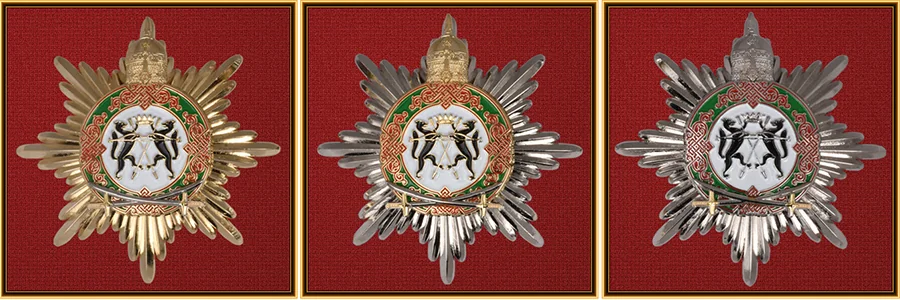
V. THE ORDER OF SUBEDEI IN THE REPUBLIC OF TUVA: SYMPTOM OR DIAGNOSIS?
Recently, in the Republic of Tuva (a federal subject of the Russian Federation, and the homeland of former Defense Minister Sergei Shoigu), an Order of Subedei was established – an award for participants in the so-called “special military operation.”
At first glance: a minor matter. On closer inspection: one of the most telling symbolic acts in the entire history of contemporary Russia.
Why do Tuvans consider Subedei “theirs”? There are grounds for it. Subedei came from the Uriankhad tribe – and Tuvans traditionally identify themselves with the Uriankhads (the Tuvan self-designation is Tıvalar, but Chinese and Mongolian sources called them Uriankhads for centuries). The border between Tuva and Mongolia is a 20th-century phenomenon; for a 13th-century nomad, it simply did not exist. The Tuvan claim to Subedei is therefore not falsification – it is ethnocultural continuity.
For a small republic to have “its own” commander who in effectiveness is the peer of Caesar, Napoleon, or Rommel – that is an extraordinarily potent symbol. Tuva is asserting a distinct heroic genealogy, parallel to and independent of Moscow’s.
VI. THREE INTERPRETATIONS – AND ONE TRAP
Line 1: A deliberate signal from the regional elite.
If this is a conscious move, the logic is plain: Tuva is articulating its own civilizational identity – not Slavic, not Orthodox, but Eurasian/Mongol. We are not fighting for Rus′ – we are fighting for our own tradition of conquerors.
The figure of Sergei Shoigu is not incidental here. A man who has lost real power in Moscow but retains symbolic influence in his homeland. The order may have been simultaneously a way to remind Moscow of his existence and a signal: Tuva has its own legitimacy, independent of the Kremlin.
A comparative example: Chechnya under Kadyrov – a parallel army, parallel rhetoric, a separate cult of personality. The difference is that Kadyrov operates openly and with Putin’s permission. Tuva operates with maximum quiet, and that may be the more dangerous symptom.
Line 2: Ideological incompetence at the center.
If Moscow approved this or simply failed to notice – it is an indicator of the erosion of ideological control. A centralized empire must filter symbols that undermine its own narrative. The fact that the Order of Subedei “passed” without correction means either bureaucratic fatigue or the breakdown of coordination between the center and the regions.
An analogue from recent history: the late USSR. When republics began issuing their own awards and symbols, it was not immediately read as separatism. In retrospect it proved to be a symptom of the collapse of the center’s ideological monopoly.
The war has forced Moscow to delegate mobilization to the regional level – financially, symbolically, organizationally. The regions have acquired resources and visibility they did not previously possess. Ideological incoherence is an inevitable by-product of this decentralization under pressure.
Line 3: A retreat from Pan-Slavism – a drift toward Eurasianism.
This is perhaps the most systemic and simultaneously the most disturbing interpretation – not for Ukraine, but for Russia itself.
Eurasianism as an ideology never fully disappeared from Russian discourse. From Savitsky and Trubetzkoy in the 1920s to Dugin today, this idea recurs with a persistence that is itself a symptom. Its core thesis: Russia is neither a Slavic state nor a European one, but a Eurasian civilization, heir to the Golden Horde rather than to Kievan Rus′. The Muscovite tsardom grew not despite the Horde – it grew out of the Horde, having absorbed its administrative model, its principles of centralization, its treatment of subjugated peoples as “uluses.”
Putin has occasionally deployed this rhetoric – particularly when it was necessary to justify the alliance with China or to articulate distance from the West. “We are not Europe” is a claim not merely geographical but civilizational.
In this reading, the Order of Subedei is neither an error nor a separatist signal, but a conscious expansion of the ideological field: Russia is fighting not as the defender of Slavdom against “Nazis,” but as a Eurasian empire to which the Turkic and Mongol peoples of Siberia, the Volga region, and Central Asia organically belong. Tuva is not an exception to the rule – it is confirmation of a new rule.
But here lies a fundamental problem that cannot be sidestepped.
Eurasianism and Pan-Slavism are not merely different emphases. They are incompatible legitimating foundations. They cannot be mixed without destroying both.
One cannot simultaneously justify a war as the protection of “brother Slavs from Nazis and NATO” – and award participants in that same war with the order of a conqueror who burned those very Slavic cities and drenched them in blood in the 13th century. This is not synthesis. It is not even contradiction. It is ideological schizophrenia that destroys the internal logic of the war itself.
Moreover: if Russia is consciously moving toward Eurasianism – it automatically delegitimizes its entire “Slavic” discourse regarding Ukraine. One cannot be the heir to the Golden Horde and simultaneously the “elder brother” to Orthodox Slavs. The Golden Horde had no brothers – it had uluses.
VII. THE CENTRAL PARADOX
The construction is as follows. The residents of the Republic of Tuva, being predominantly Turkic-speaking descendants of the Uriankhads, are awarded for the killing of Ukrainians – predominantly Orthodox, or at least those who identify with the Christian world – with an order named after a man who in the 13th century destroyed the very “Slavic” cities of which Russia today is so proud: Kyiv, Chernihiv, Pereyaslavl.
The Order of Subedei is an award for the descendants of the conquerors of Slavdom, given for participation in the destruction of Slavdom. All within the framework of the official doctrine of “defending the Slavic world from the West.”
If this is not ideological collapse – what is?
VIII. THE IDEOLOGICAL SUPERMARKET: WHEN NARRATIVE IS NO LONGER NEEDED
Perhaps the most precise diagnosis is not “schizophrenia” but something even more pragmatic and more disturbing.
Perhaps Russia no longer needs a single coherent ideology. A set of local motivators is sufficient – ones that do not intersect or contradict each other only because each audience receives its own and does not see what others are receiving: Slavs are offered Pan-Slavism and the “defense of the Russian world,” Tuvans are offered the Order of Subedei and a return to the tradition of conquerors, Chechens are offered jihad against the godless West and personal loyalty to Kadyrov, oligarchs are offered money, assets, and impunity, regional elites are offered symbolic autonomy and access to military resources.
War as an ideological supermarket, where everyone finds their own justification – and where there is no cashier.
This model functions. It mobilizes, it holds the coalition together, it allows the center to avoid choosing between incompatible narratives. But it functions only as long as the external pressure of war holds and as long as the different shoppers in the supermarket do not begin comparing receipts.
Because this is no longer a sign of strength – it is a sign that a unified imperial project no longer exists. There is only tactical management of different groups through different symbols. And tactical management without a strategic center is not a state. It is a coalition that holds together only as long as the external adhesive holds.
For comparison: the late Roman Empire also maintained the periphery through local cults, local chieftains, and fractured loyalties – until the moment when it turned out that “Rome” was only a name, and no longer a real central power.
IX. CONCLUSION
The strongest position is not to choose among the three lines of interpretation, but to assert this: the very impossibility of distinguishing between those three versions is itself the diagnosis.
A healthy empire with a strong ideological center would either have prevented such an order from existing, or would unambiguously have controlled its meaning. The fact that we cannot say – whether this was intentional or not, whether it is a signal of regionalism or Moscow’s incompetence, whether it is Eurasianism or merely situational rhetoric – attests to one thing: the center is no longer the sole producer of meaning.
And when there are many producers of meaning – what begins is not a flourishing, but a bazaar.
Subedei served four khans and outlived them all. He knew when to advance and when to stop. He never began a battle without knowing where he would exit it. He subjugated peoples, but he never gave them mutually contradictory promises.
Russia’s current rulers gave him the name of an award – but they appear to have never read his lessons.
Subedei died in his own bed. Most of those who receive the order bearing his name will not have that luxury. And the state that sent them – it seems – also does not know where to stop.
P.S. Before the Mongols burned Kyiv in 1241, they burned Moscow – in 1238.