Those Who Fail to Learn the Lessons of Their Own Gulag are Building a New One

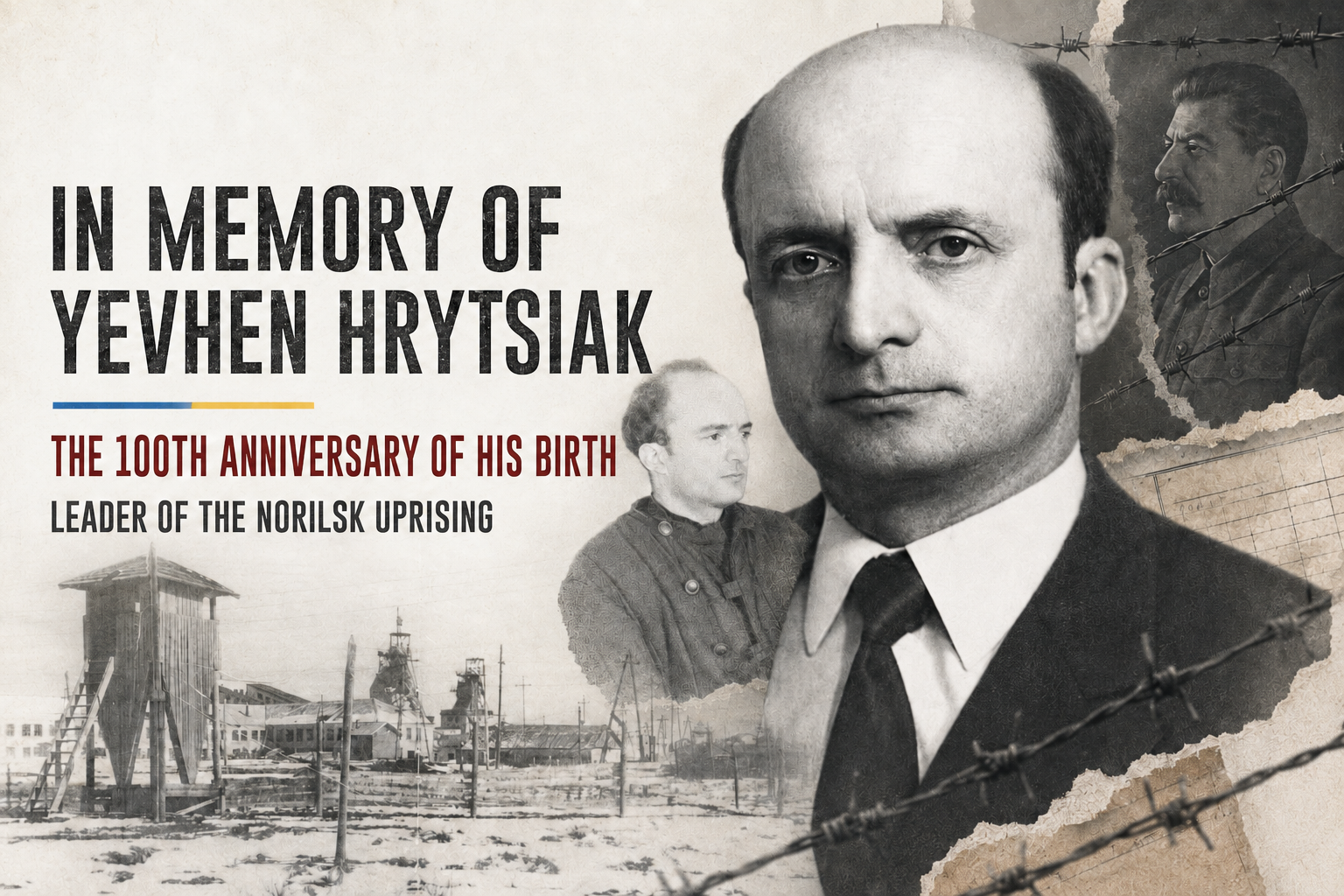
In February 2026, the Moscow authorities officially announced that a ‘Museum of Memory for the Victims of the Genocide of the Soviet People’ would open on the site of the Gulag History Museum. The same building, the same halls — but a fundamentally different memorial logic. Instead of documenting the crimes of the Soviet state against its own citizens, the new concept focuses on the crimes of the Nazis during World War II.
This is not a coincidence but a well-rehearsed technique for suppressing memory. Back in November 2024, the museum was ‘temporarily’ closed on the pretext of fire safety violations — a classic administrative technique for neutralising inconvenient institutions. In January 2025, the director was dismissed for refusing to censor the exhibition section on Stalin’s repressions. At the same time, the prosecutor’s office began reviewing the rehabilitation cases of repression victims — a signal that discussion of state crimes is once again becoming the exclusive monopoly of the state.
The Kremlin’s mechanism for normalising crimes operates on several levels simultaneously. First, there is the substitution of the subject of the crime: instead of ‘the state tortured its own citizens,’ it becomes ‘an external enemy committed genocide against the Soviet people.’ The state is thereby transformed from perpetrator into defender, and responsibility disappears. Second, there is the administrative suffocation of memory institutions: Memorial has been liquidated, the Gulag Museum closed, commemorative events banned, and monuments demolished. Third, there is the occupation of memorial space: the very physical places where truth was once spoken now produce the official narrative. The building does not change — its ‘truth’ does.
What is happening to the Gulag Museum is not a specifically Russian anomaly — it is a reproduction of classic imperial pathology. History demonstrates a consistent pattern: states that build their legitimacy on violence systematically destroy the memory of that violence. Autocracy does not tolerate witnesses. Moreover, it actively rewrites the past, because without that rewriting, today’s crimes become impossible to justify — each new crime requires prior authorisation from history.
The Russian version of this pathology, however, has its own specific character. The Russian imperial tradition never cultivated a developed culture of public self-criticism; instead, it nurtured the myth of the state as both eternal victim and eternal victor. This construct is internally paradoxical but functionally effective: the victim cannot be the executioner, and the victor is always right. It is therefore fundamentally impossible, within this framework, to recognise the Gulag as a crime of the state itself — doing so would destroy both pillars of the narrative at once.
This is the imperial logic of despair: when it is impossible to deny that a crime has been committed, only one option remains — deny that the state was the perpetrator. Instead of ‘the state tortured,’ it becomes ‘the people suffered.’ The agent is replaced by the passive voice. Responsibility gives way to lamentation. That is why the Gulag Museum is being replaced by a ‘Museum of Memory of the Victims’: the victims remain, but the executioner disappears, dissolving into the faceless tragedy of history. The museum that was meant to ask ‘who did this?’ now answers only ‘what was done to us?’ The difference is fundamental — both legally and morally.
This logic is also directly relevant to understanding the war against Ukraine. A state that systematically destroys the memory of its own Gulag and the millions of victims of Soviet terror is the same state that today reproduces these practices on foreign soil — and similarly refuses to acknowledge them. Normalising past crimes is not simply a matter of historical justice. It is the condition that makes new crimes possible.
Those who do not learn the lessons of their own Gulag are building a new one.