Carthago Delenda Est

Two millennia ago, Roman senator Cato the Elder returned from a trip to Carthage and saw a city rebuilt after defeat. From that moment on, he invariably ended every speech he made in the Senate, regardless of the topic — finance, agriculture or urban trade — with one phrase: ‘Ceterum censeo Carthaginem esse delendam’ — ‘Furthermore, I believe that Carthage must be destroyed.’ Not for revenge. Not out of hatred. For the sake of Rome’s future — as long as Carthage exists, the threat exists.
Today, in the fifth year of the biggest war in Europe since World War II, this phrase takes on a new, painfully relevant meaning. But to understand its depth, we must first look at the numbers — cold, horrific and eloquent.
THE VIETNAM WAR (1965–1975)
The Vietnam War was a generational moral and strategic disaster for the United States. The Vietnam Veterans Memorial in Washington contains the names of 58,220 American servicemen who were killed or went missing in action.
The total duration of active combat operations was about 10 years. Despite its enormous military and technical superiority, the United States suffered a strategic defeat — not on the battlefield, but within its own society. The anti-war movement, PTSD among veterans, and the moral erosion of the army were all consequences of a long-term asymmetric war with no clear goal or end.
SOVIET-AFGHAN WAR (1979–1989)
Over the course of ten years, 620,000 Soviet soldiers passed through Afghanistan. The total irretrievable losses of the USSR armed forces amounted to 14,453 people. About 35,000 were wounded. The Afghan side paid an incomparably higher price: the deaths of 1 to 3 million Afghans, representing 6.5 to 11.5% of the country’s population.
Mikhail Gorbachev called Afghanistan a ‘bleeding wound.’ This wound not only exhausted the Soviet army and economy — it undermined the legitimacy of the system itself. Only two years separate the withdrawal of troops in February 1989 and the collapse of the USSR in 1991. Coincidence? Hardly.
THE WAR IN UKRAINE (2014 — PRESENT)
And here we come to figures that do not fit into any peacetime categories of thinking.
According to various estimates, from February 2022 to December 2025, Russia suffered about 1.2 million combat casualties — killed, wounded and missing. No major power has suffered such losses in any war since World War II.
In four years, Russia has suffered as many casualties in Ukraine as the Soviet Union lost in all its wars combined in the 77 years after 1945 — from Hungary and Czechoslovakia to Afghanistan and Chechnya. To understand the scale: that’s five Afghan wars in one.
‘CARTHAGE’ AS A METAPHOR FOR THE FUTURE
Cato was not mistaken: Carthage was able to recover after its defeat in the Second Punic War. This is what frightened the Roman senator — not the past, but the future. And this is where the key parallel lies.
The Afghan campaign cost the USSR ~15,000 lives and was one of the factors in its collapse. The war in Ukraine has already cost Russia 20–25 times more than Afghanistan — and the state has not collapsed. This means one thing: modern Russia has a much higher threshold of state pain tolerance, and society has a much deeper degree of militaristic brainwashing.
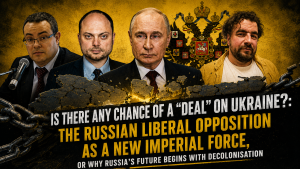
If Putin falls tomorrow, if a nominally ‘liberal’ opposition comes to power, if the West lifts sanctions — what will remain? What will remain is a generation of men who have personally experienced defeat, which they perceive as a personal defeat. What will remain is a mass cult of fallen ‘fighters.’ What will remain is revanchism — not ideological, as in 1930s Germany, but personal and visceral: from father to son, from wound to hatred.
Vietnam cost the US 58,000 lives — and buried American society’s appetite for ground wars for decades. Afghanistan cost the USSR 15,000 lives — and became one of the cornerstones of its collapse. But Russia has already lost more than 1 million in Ukraine — and continues to fight at a rate of ~1,000 casualties per day. This means that traditional mechanisms of ‘exhaustion’ do not work in the same way. A different logic is needed.
THE CULT OF VETERANS AS A STRUCTURAL THREAT
But revanchism has a specific human face. Millions of men returning from Ukraine with combat experience, psychological trauma and a sense of participation in a “sacred mission” are not an abstraction. They are a social body that the state has already begun to transform into a privileged class.
Veterans are given benefits, loans, and priority in appointments to government positions. They receive a social status that they did not have before the war. This creates a vertical structure of loyalty: between the state and those who fought — and against those who did not fight or who have doubts.
This cult of the veteran is not a Russian invention. After the First World War, Germany produced a generation of front-line soldiers who felt “betrayed” by civil society and the Weimar Republic. The stormtroopers of the NSDAP were recruited from this very milieu — people with combat experience, a sense of righteousness and contempt for “soft” democratic institutions. Russia is now producing a similar social type on an industrial scale — with the difference that the number of combatants in the Ukrainian campaign already exceeds the number of veterans of any conflict in Soviet or post-Soviet history.
The fundamental feature of this threat lies in its temporal dimension. Russia’s defeat — if it happens — will be perceived by these people not as the failure of Putin’s regime, but as a personal defeat: their sacrifice, their fallen comrades, their suffering. The resentment will be passed down: a father who returns crippled will pass on to his son not disappointment in the government, but hatred for ‘those who prevented victory’ — Ukraine, the West, and ‘traitors’ within the country. This is the classic “stab in the back” matrix that the Weimar Republic inherited from the Kaiser’s army and which ultimately destroyed the republic itself.
It is important to understand that this phenomenon will not disappear with Putin, will not dissolve with a change of power, and will not be neutralised by economic reforms. It is structurally embedded in the demographic fabric of Russia for decades to come. According to estimates, more than a million conscripts and contract soldiers have already gone through the Ukrainian campaign. Even if a third of them die or are seriously wounded, hundreds of thousands will return home. Their families, their communities, their social networks will become a living substrate for revanchism. Any future authoritarian or populist leader of Russia will have at their disposal this army of the aggrieved, ready to mobilise under the slogan of “restitution of honour”.
Fundamentally, this cult of veterans will exist as long as Russia itself exists as an empire. Because it is imperial consciousness that transforms an ordinary defeat in war into a metaphysical catastrophe. In a nation-state, the army fights for a specific territory and a specific people — defeat is a defeat for the state, not a defeat for identity. But in an imperial state, the army fights for a “mission”, for the “fate of civilisation”, for the “right to exist” of the metropolis.
The defeat of such an army is not just a loss in battle — it is a denial of the very meaning of sacrifice, of Russia’s very right to be what it considers itself to be. That is why neutralising the cult of veterans and neutralising the imperial matrix are inseparable tasks. It is impossible to solve one without solving the other.
INSTEAD OF A CONCLUSION: DECOLONISATION AS THE ONLY WAY OUT
‘Carthage must be destroyed’ — but not physically. We are talking about the destruction of the imperial matrix of consciousness. As long as Russia remains a colonial metropolis that perceives its neighbours as ‘younger brothers’ or ‘breakaway territories,’ any peace will only be a truce between two phases of the same aggression.
Neither Hannibal nor Carthage disappeared on their own. Carthage was destroyed. This metaphor is cruel — but it is honest. The only question is who determines what exactly in modern Russia is ‘Carthage’ that must be destroyed: the state? The army? The ideology? The answer to this question will determine the security architecture in Europe for the next hundred years.